Cultural Competency in Virtual Nursing: The Skill That Turns Good Care into Great Care
Telehealth Skills & Clinical Practice
Unlock better patient rapport and clinical outcomes: why cultural competency isn’t optional for remote nurses—and how to actually build it.
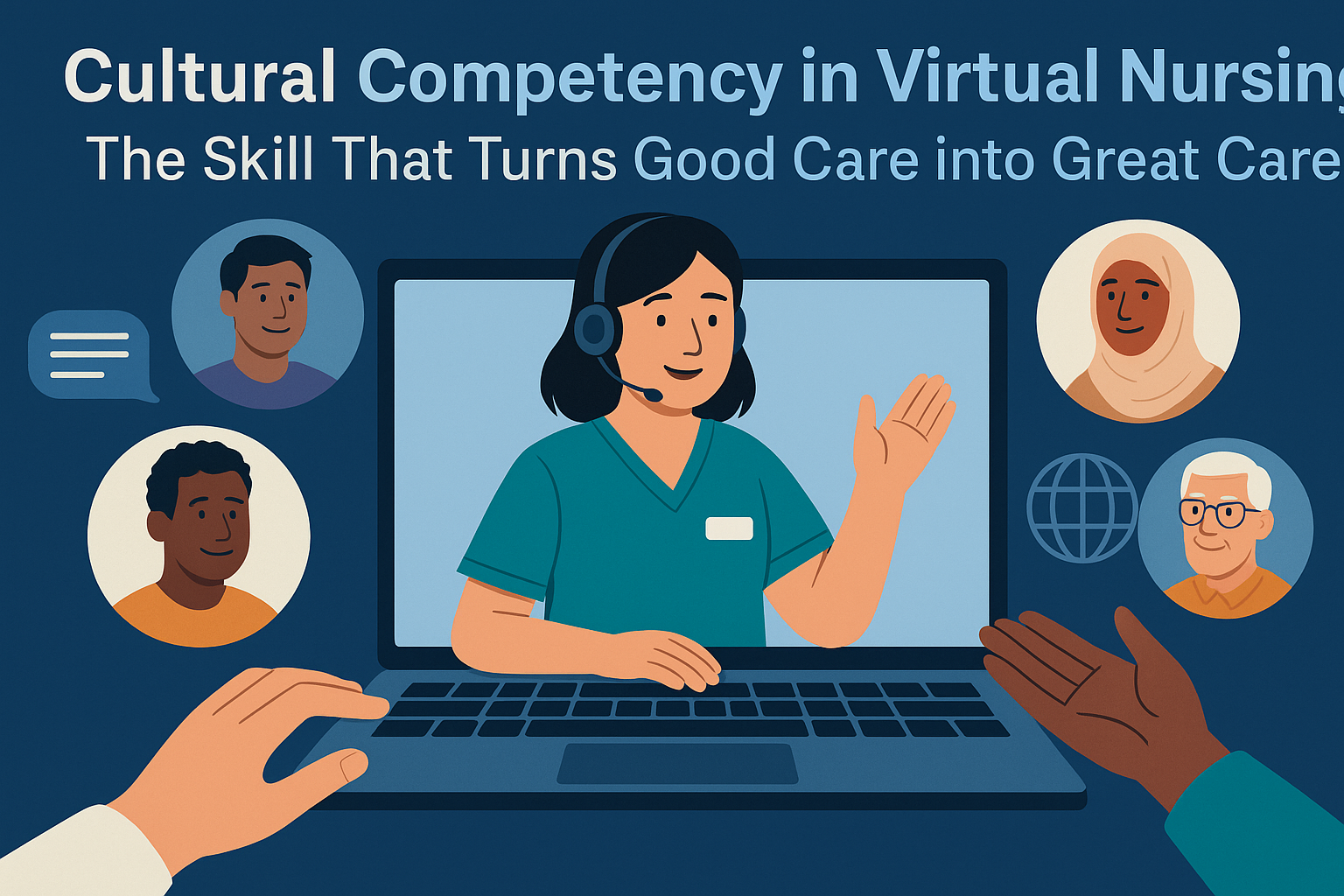
Let’s be honest: the fast-forward shift from hospital hallways to living room workstations is thrilling (hello, fuzzy socks!). But the move to virtual nursing also means we can’t rely on “in-person intuition” to pick up cultural cues. Instead, we have to be extra intentional—because, yes, patients will remember if we pronounce their names wrong or misinterpret family roles (especially if grandma is silently running the show in the background).
When you’re not physically sharing space, every word and gesture matters. Missteps—from making assumptions about technology access to unknowingly scheduling a visit on a major holiday—can quickly erode trust. Add in language barriers, regional dialects, and different health beliefs, and suddenly, your telehealth visit is more high-stakes than you bargained for.
In telehealth, cultural competency isn’t just nice-to-have; it’s core to safe, high-quality nursing care. It means respecting beliefs and background, whether your patient is Amish in rural Pennsylvania or Navajo in Arizona. It impacts everything: medication adherence, satisfaction scores, and your own stress levels (trust us, clarifying expectations upfront saves headaches—literal and emotional).
Let’s get real—missing a simple cultural cue isn’t just awkward, it’s clinical. For example, nurses with Florida-based UnitedHealth, or Cigna’s telehealth arm, have reported that asking about dietary preferences (“low-salt diet, please”) goes nowhere if you miss that your Cuban or Haitian patient’s meals are non-negotiably tied to tradition. Instead, ask what healthy options look like at their table. Suddenly, advice shifts from impossible to actionable.
On the flip side, being aware that Ramadan affects medication timing—or that some Native American patients may involve elders in decision-making—means you help patients feel seen, fueling better rapport and outcomes.
Developing cultural competency is ongoing. Add these wins to your resume (seriously—our new AI Resume Builder makes it easy to highlight these skills). Show potential employers you’re not just clinically sharp, you’re culturally aware—a must-have in today’s diverse telehealth landscape.
Whether you’re chatting with someone across town or across the country, your commitment to understanding their lived experience is the “secret sauce” that makes virtual care personal—and powerful. Keep learning, stay curious, and remember: empathy travels, even over Wi-Fi.


.svg)
.svg)
.svg)
.svg)
