How to Handle Difficult Patients Virtually: Nurse-Proven Tips for Telehealth Triumphs
Telehealth Skills & Clinical Practice
Navigate tough telehealth patients like a pro—ditch the stress and reclaim your shift with these reality-tested remote nursing strategies.
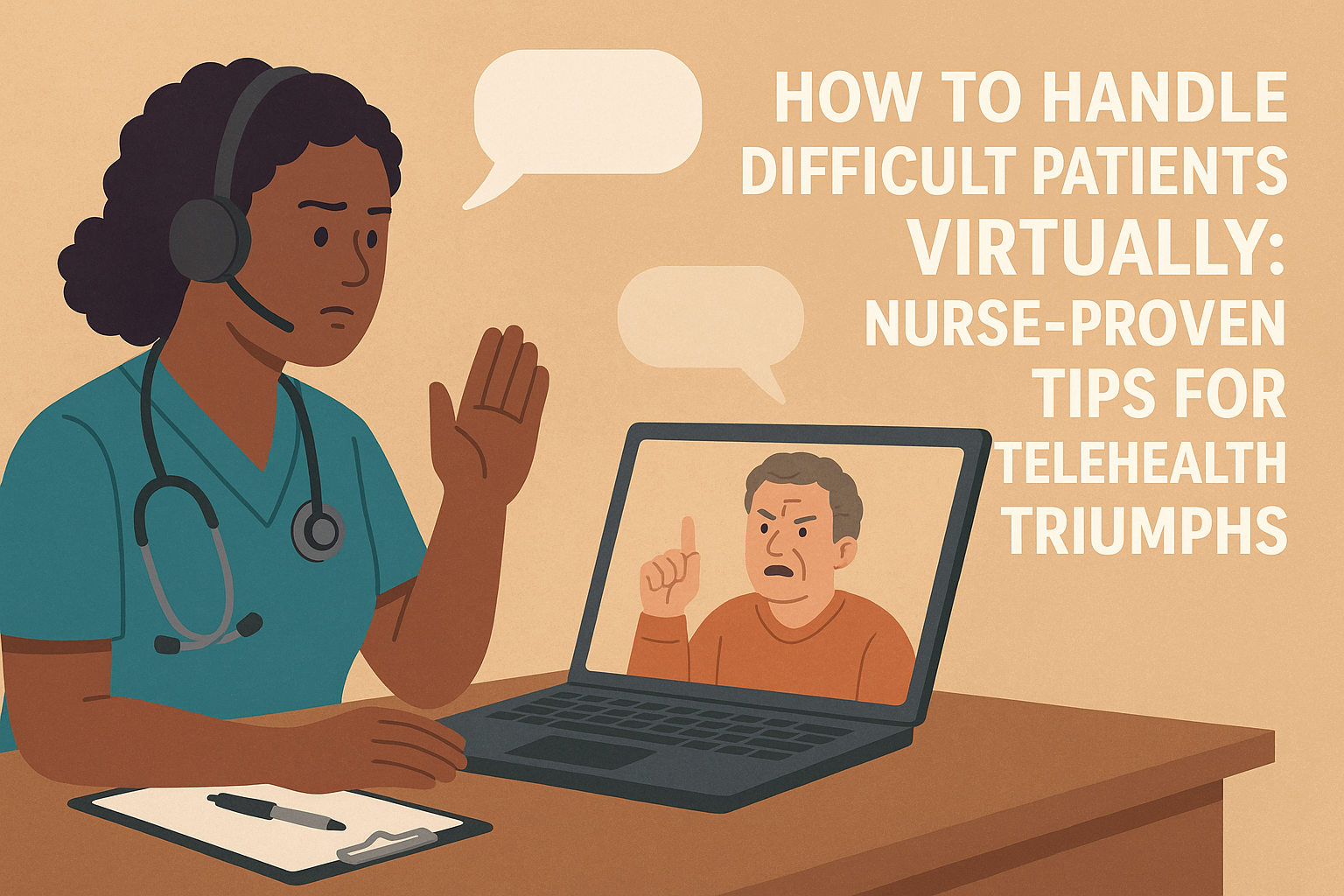
If you've ever dodged a thrown urinal or soothed a screamer during night shift, you know navigating patient personalities is part of our DNA. But when you’re remote, those old tricks—like a reassuring touch or a quick call for backup—don’t always translate through a computer screen. Let’s get real about handling difficult patients virtually—because you deserve less stress, more confidence, and maybe even a coffee that’s still hot.
Think about it: tech issues, privacy worries, and feeling “disconnected” can stoke anxiety and short fuses. Throw in cyber-rattled nerves or a new diagnosis, and suddenly, the patient you’re Facetiming is way pricklier than in person. Recognizing this is the first step—virtual care isn’t just about the pixels; it’s about patience (ours, and theirs).
When conversations go sideways, controlling your space is power. Don’t be afraid to use your ‘mute’ and ‘hold’ buttons if you need a breather or to consult resources. Calmly say, “I’m going to put you on a brief hold while I review your chart,” then take those precious seconds to regroup. Pro tip: Keep a sticky note nearby with grounding mantras or, let’s be honest, a meme that makes you snort-laugh.
Remote rants can feel extra personal—especially when you’re in your own home. The fix? Channel your inner detective: “Help me understand what’s making you frustrated right now.” Sometimes just naming the emotion (“I can sense this is really upsetting for you”) diffuses defensiveness. Even via webcam, empathy shines through.
With virtual care, the lines between work and home can blur—don’t let patient expectations bulldoze your sanity. Set expectations early: explain what the platform can/can’t do, clarify wait times, and never apologize for upholding clinical protocols. If a patient crosses a line (think: abuse or threats), document thoroughly and refer to your agency’s escalation protocol. Major employers like Ascension and Healthfirst (both hiring remote RNs) provide clear policies—learn yours and don’t hesitate to use them.
Ace your next call by stacking your virtual arsenal: pop into the Telehealth Nurse Network community for on-the-spot advice, or dive into the Career Accelerator (Formerly the Telehealth Mastery Suite) for pro communication frameworks and real-world de-escalation examples. You’re not alone. Swap stories, share strength, and get support when the going gets tough.
Handling tough patients virtually takes more than patience—it takes preparation, boundaries, and a toolkit that’s actually built for telehealth. Use these strategies, trust your instincts, and remember: even from the couch, you’re making a difference (bonus: your feet don’t hurt at the end of the day). Ready for more? Check out our Free Starter Kit or drop by our remote nurse job board when you’re ready to take the next step.


.svg)
.svg)
.svg)
.svg)
