Why Every Telehealth Nurse Needs a Cheat Sheet
If you’ve ever joined a remote team meeting and thought, “Did someone just speak another language?”—you’re not alone. The telehealth world loves its buzzwords, and knowing the lingo is half the battle to feeling like you belong. So, slide into your comfiest chair and let’s untangle the web of telehealth talk together, one term at a time.
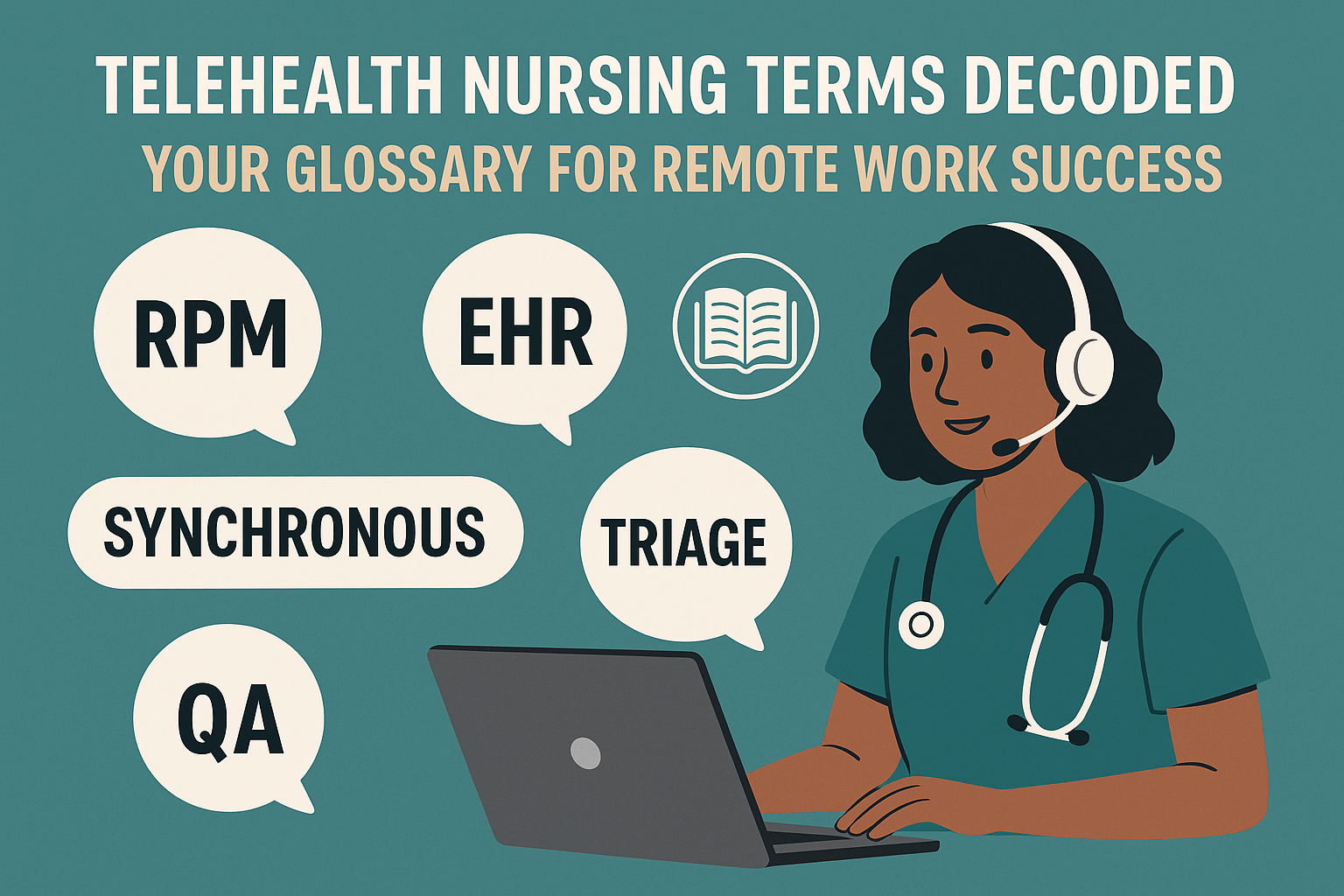
The Telehealth Nurse Lexicon: What’s What (And What Matters)
- Telehealth: An umbrella term covering all healthcare delivered with technology—video, phone, app… you name it. This is your new ‘virtual hospital’.
- Telemedicine: Slightly more formal. Usually doctor-to-patient services done via tech. Think of it as “the MD stuff” inside telehealth.
- Synchronous vs. Asynchronous: Synchronous is in real time—hello, video visits! Asynchronous means care that isn’t live—like secure messages, telenursing triage forms, or portal questionnaires.
- Remote Patient Monitoring (RPM): You’ll see this a ton. RPM is when you help track a patient’s vital signs or health data remotely—think blood pressure cuffs that ‘phone home’ nightly.
- Virtual Nursing: Your day job! Providing care, education, and support over the screen or phone. (Yes, you can still be the best part of a patient’s day, even in bunny slippers.)
- EHR/EMR: Electronic Health Record/Electronic Medical Record. These digital charts follow your patients—and you’ll need to document like a pro. Pro tip: Brush up on platforms like Epic or Cerner, especially if you’re surfing job boards like the Telehealth Nurse Network Job Board.
- HIPAA-Compliant: Means “seriously secure” and healthcare-law friendly. Never use regular email for patient info, and double-check your telehealth employer’s tools meet the gold standard.
- Store-and-Forward: Sharing clinical information (x-rays, photos, reports) asynchronously for review by a provider or specialist at another time. Perfect for second opinions or consult work.
- Scope of Practice: Your legal playbook. What you’re allowed to do as a nurse, especially tricky when caring for patients in different states (cue multistate license talk!).
- Teletriage: Assessing patient needs over phone or video and deciding next steps. Basically, your assessment skills become superpowers.
- Client Portal: Patients use this secure site to ask questions, access labs, and have “those” Friday night med refill emergencies you’ll master in no time.
- Device Integration: Syncing patient home gadgets (glucometers, pulse oximeters, etc.) to your system for real-time monitoring—welcome to the future!
Making the Terms Work for You: Tips from the Trenches
Don’t sweat if this feels a bit overwhelming—everyone started confused once. Here’s how to get telehealth fluent fast:
- Start Small: Tackling just three new terms a week makes everything less intimidating.
- Ask for Demos: Got a new portal or RPM device at work? See if your trainer will screen-share and walk you through it live.
- Practice in the Wild: Try using new terms in your emails or during huddles—even if it feels awkward at first. (We promise, you’ll sound like an insider before you know it.)
Ready to Go Pro? More Support Awaits
Want to level up your telehealth know-how? Our Career Accelerator (Formerly the Telehealth Mastery Suite) has interactive modules—including video walkthroughs of telehealth platforms—that’ll make you fluent in no time. And if you get stuck or just want to share a #FacepalmFriday moment, our community is full of supportive nurses shaking off the jargon jitters right along with you.
Bottom Line—Don’t Let the Jargon Be the Thing That Trips You Up
Every nurse who’s gone remote has stumbled over a new term (or ten). Keep this glossary handy, check in with your crew, and remember: smart nurses ask questions. You’ve got this—and we’ve got your back!


.svg)
.svg)
.svg)
.svg)
