Remote Nursing’s Big Glow-Up: How COVID-19 Changed Telehealth for Good
Career Growth & Industry Trends
Discover how remote nursing evolved since COVID-19—and why now is the best time to swap your badge swipe for Bluetooth.
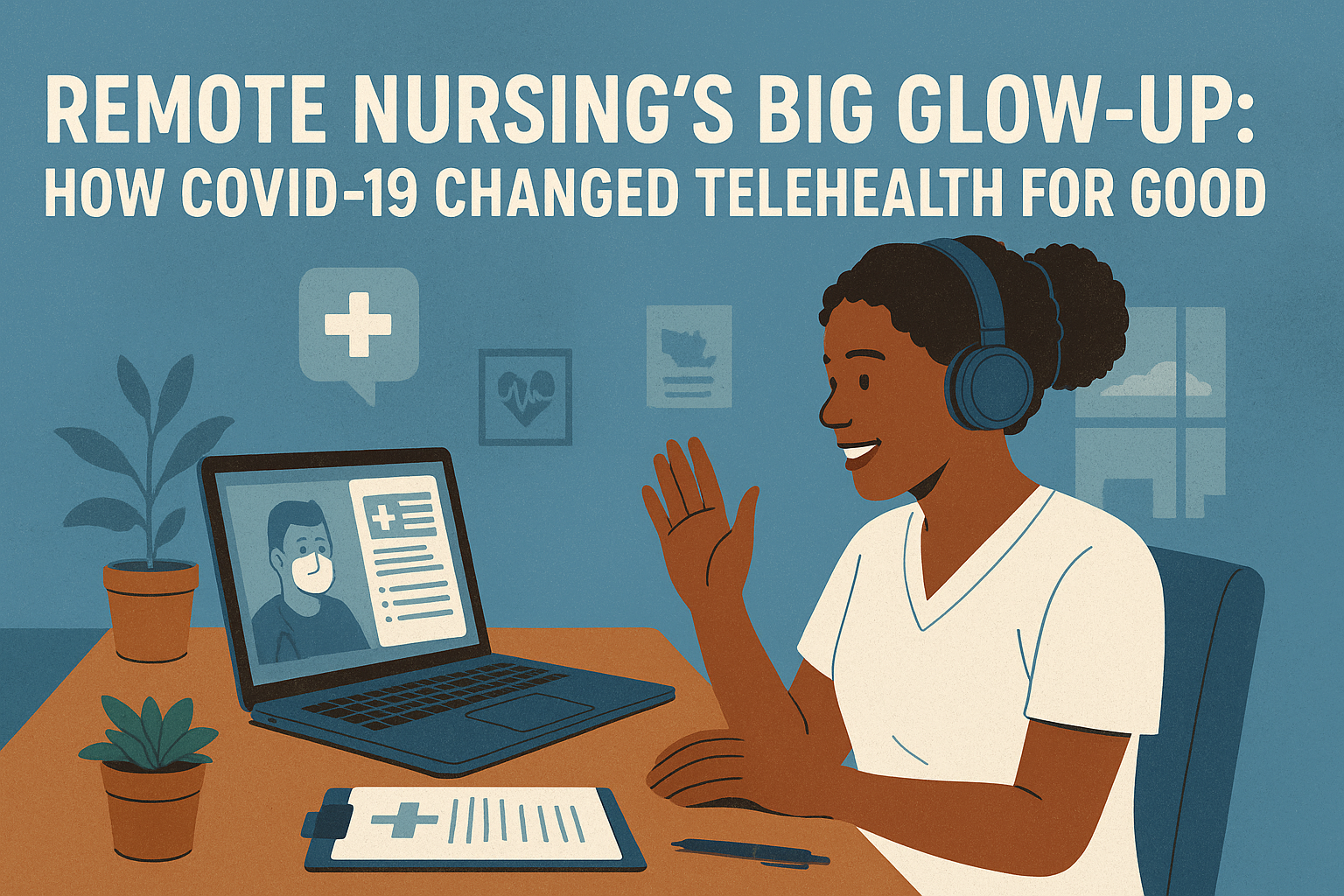
If the phrase “unprecedented times” still makes your left eye twitch, you’re not alone. Before 2020, remote nursing jobs were more unicorn than reality—reserved for the rare case managers or after-hours triage nurses. But then COVID-19 happened, and overnight our profession’s pivot game got Olympic-level strong.
Suddenly, telehealth wasn’t just an option. It was survival—both for patients and for nurses burned out on bedside chaos, PPE roulette, and work/life BINGO. Here’s how the wild ride went down—and why remote nursing is now more than a pandemic stopgap.
Think about it. Hospitals were bursting, clinics closed, and every patient with a cough wanted reassurance from the safety of their living room. Enter remote nurses—triage lines blowing up, chronic care calls nonstop, and nurse educators logging in at all hours. Companies like Teladoc, Carenet, and UnitedHealth Group needed licensed RNs who could do it all from anywhere.
Insurers and health systems scrambled for telehealth help, and (finally!) red tape loosened. In record time, licensing across state lines got easier, nursing technology improved, and appointment scheduling apps became everyone’s new BFF.
Let’s get real: Patients want telehealth. Health systems need telehealth. And nurses? We’ve shown we can crush care plans and juggle three browser tabs at once—even with a toddler lurking offscreen.
Companies like Teladoc, Carenet, and even big names like UnitedHealth Group are posting flexible remote roles daily. Just check out the Telehealth Nurse Network Job Board—there’s never been a juicier time for nurse career freedom.
COVID didn’t invent telehealth nursing, but it sure supercharged it. We all learned how to pivot, adapt, and—let’s be honest—troubleshoot Zoom sound issues with the best of them.
If you’re new to remote nursing, the learning curve is real, but so are the rewards. Less badge-swipe, more autonomy. The scrubs can stay—just pair them with slippers. Welcome to nursing’s new normal—you belong here.


.svg)
.svg)
.svg)
.svg)
