Telephonic Triage Nursing: What It Is, How It Works, and If It’s the Right Remote Role for You
Remote Nursing Specialties & Roles
Curious about telephonic triage nursing? Here’s what you need to know before swapping the hustle of the floor for clinical work by phone.
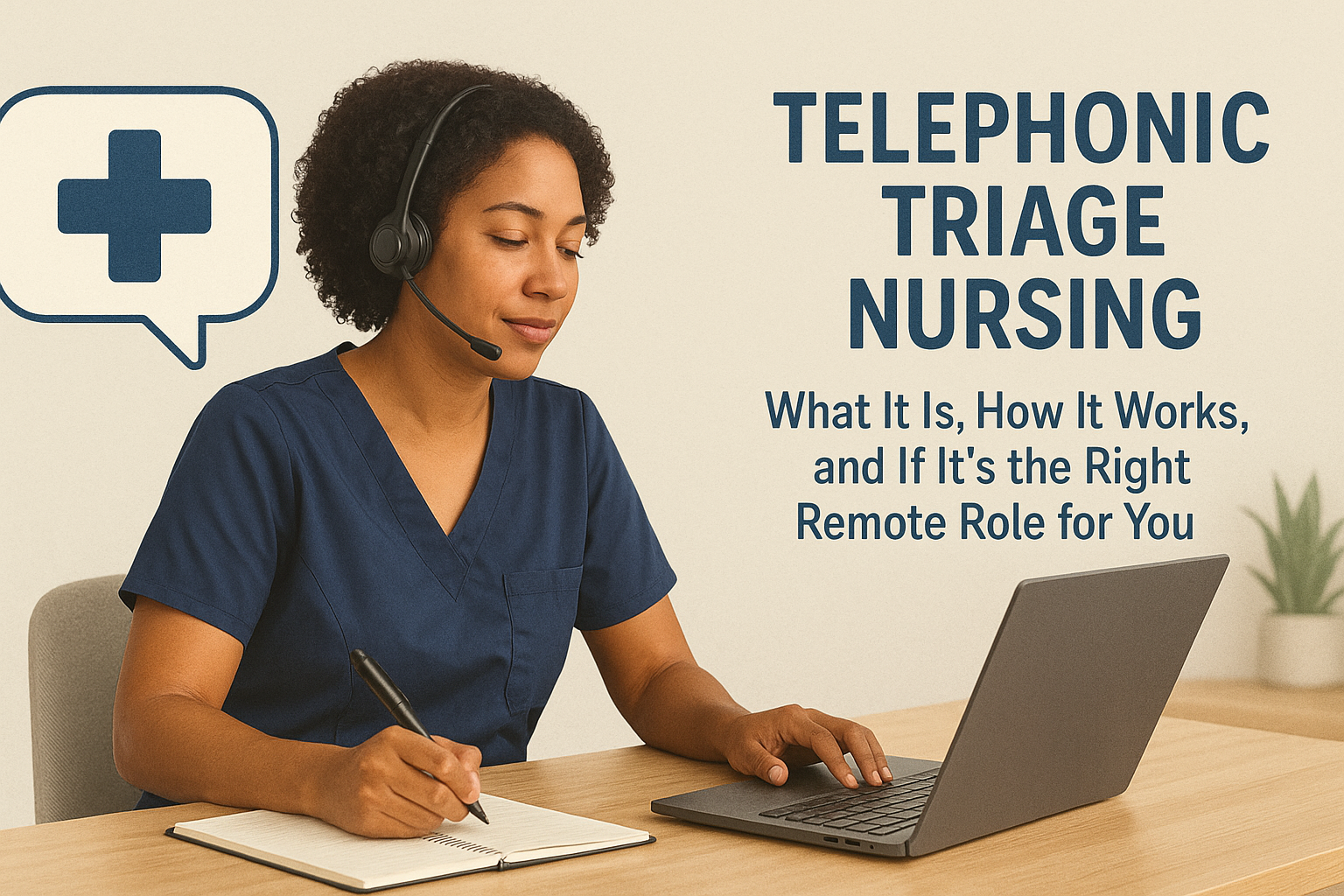
If the idea of caring for patients while wearing your favorite slippers sounds like your happy place, telephonic triage nursing might just be your golden ticket. Telephonic triage nurses are like the clinical quarterbacks of the remote world—they answer calls (sometimes a lot of calls), assess symptoms on the fly, and guide worried folks toward the right level of care, all without breaking a sweat or leaving the house.
Telephonic triage nurses field calls from patients (or their very worried family members), ask all the questions you’d triage at an urgent care, and use their clinical skills to decide next steps. You’ll lean on standardized protocols, like Schmitt-Thompson clinical pathways or similar algorithms, so you’re not flying by the seat of your joggers. Think: “Should I go to the ER, urgent care, or just take some Tylenol and nap on it?”
This isn’t just nurse advice lines (though that’s classic triage!)—it goes much wider. You might work for a hospital call center, insurance company, after-hours pediatrics line, or even telehealth startups like Fonemed, Optum, or UnitedHealth Group.
Real talk: There are zero coffee breaks to go bandage a wound. It’s all assessment and teaching—no hands-on skills here, which some nurses miss. But for others? Dream come true.
You’re a great fit if:
Bonus points if you’re a parent—nothing tunes your triage ears quite like toddler fevers at 2AM.
If your favorite part of nursing is figuring out the puzzle using just your brainpower (and maybe caffeine), telephonic triage is a remote role that puts your assessment skills center stage. It demands top-notch clinical judgment, empathy, and a knack for calm, clear communication—even when someone’s baby has a 104-degree fever and Google is fueling the panic.
Ready to line up your first telephonic gig? Start with our Telehealth Nurse Starter Pack to polish off your resume and cover letter, then hit the job boards. We’re rooting for you!


.svg)
.svg)
.svg)
.svg)
