Virtual Nurse Jobs: What They Are and How to Get One
Remote Nursing Specialties & Roles
Virtual nurse jobs cover two things: hospital virtual nursing that supports inpatient units by camera, and remote telehealth roles like triage and care management. Here's what each looks like and how to get hired.
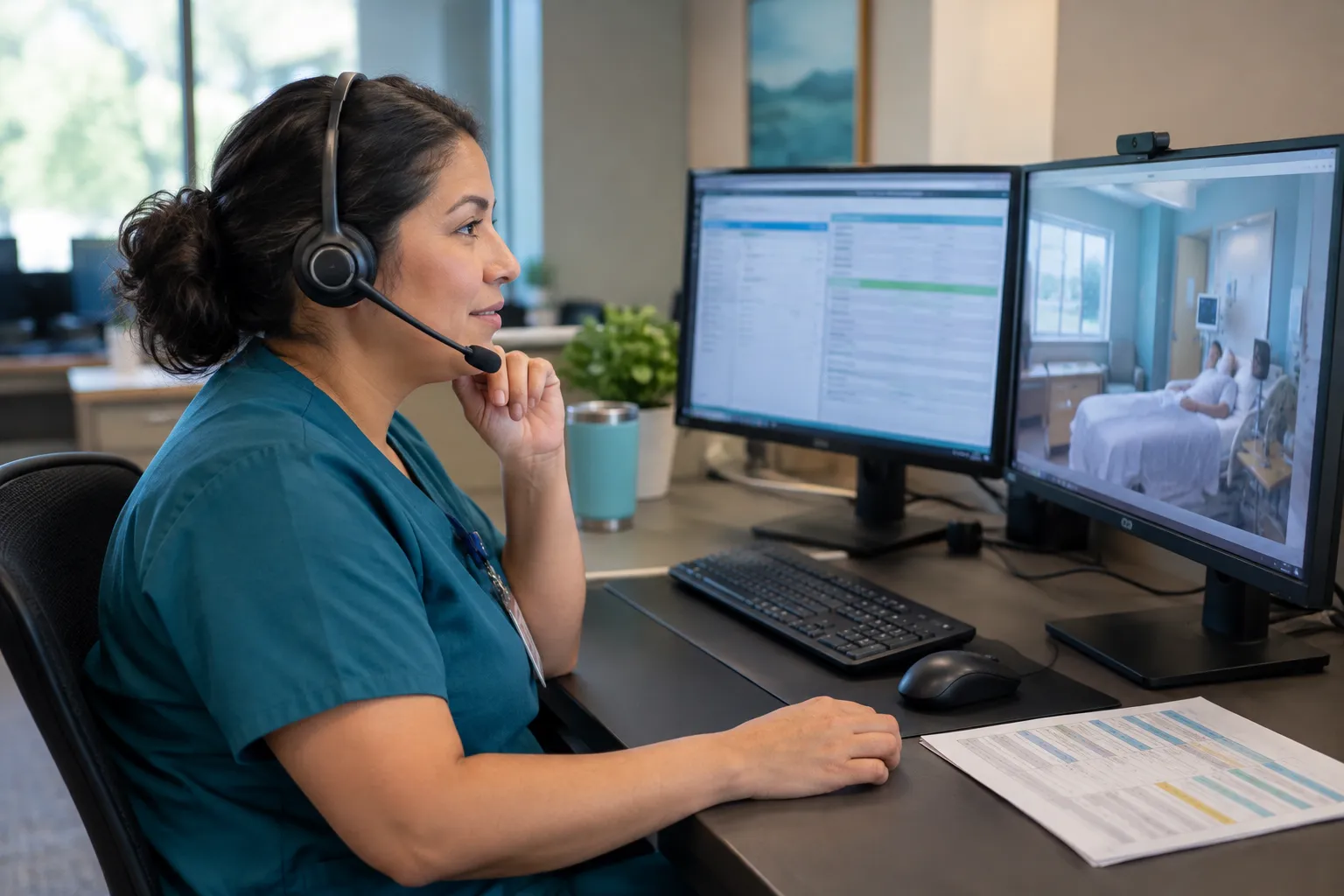
Virtual nurse jobs are nursing roles you do through a camera and a computer instead of at the bedside. Most fall into two groups: hospital virtual nursing, where you support inpatient units from a hub, and remote telehealth roles like triage, case management, and chronic care. Both are real nursing jobs with real licenses and real patients. They just happen somewhere other than a hallway.
Here's how each type works, what employers tend to look for, and where the postings actually live.
The term gets used for two different things, and knowing which one a posting means saves you a lot of confusion.
Both are sometimes called virtual nurse jobs. Read the job description closely, because a hospital virtual nursing role usually expects you to know inpatient workflow cold, while a telehealth role may care more about phone skills and documentation speed.
You're at a desk with a headset and a camera, logged into the EHR and usually a video platform that connects to patient rooms. Your assignment might be a set of rooms on two or three units, or a queue of admission and discharge tasks that bedside nurses request.
Common tasks include:
Some systems also use virtual nurses for documentation support or to help move patients through the discharge process faster. The work is often fast and task based, and you're on camera a good chunk of the day, so you need to be comfortable being visible and talking clearly.
Most hospital virtual nursing postings ask for several years of acute care experience. That makes sense. You're coaching and supporting bedside nurses and talking to inpatients you've never touched, so you need solid clinical judgment and a working knowledge of how a unit runs.
Beyond experience, hiring managers tend to watch for:
If you're wondering how much bedside time really matters, this piece on whether you need bedside experience for a remote nursing job goes deeper. Short answer: it helps, and for hospital virtual nursing it's usually expected.
Schedules vary by employer. Hospital virtual nursing often runs 12 hour shifts, and some systems run 24/7 hubs, so nights and weekends come up. Telehealth roles lean more toward business hours, though triage lines can run evenings and weekends too.
On pay, the Telehealth Nurse Network job tracker gives a useful snapshot. Across remote virtual nursing postings in the last 6 months, hourly postings typically listed about $38 to $90 per hour, with a median of 48 posted ranges. That's a wide spread because it mixes hospital virtual nursing with telehealth roles at different experience levels. Always check the posting itself for the real number.
Sometimes, but not always. In the Telehealth Nurse Network job tracker, 15% of remote virtual nursing postings asked for or accepted a compact (multistate) license. The rest were tied to a single state.
The rule that matters: you must be licensed in the state where the patient is located at the time of care, not just where the employer is headquartered. A hospital hub in one state may serve patients in several. Before you apply, check the posting for which states it covers, then confirm your license status with your state board of nursing, nursys.com, or nursecompact.com. Requirements and fees change, so the official source is the one to trust.
In the Telehealth Nurse Network job tracker, the employers posting the most remote virtual nursing roles over the last 6 months were Aetna (CVS Health), One Medical, CareTalk Health, Trinity Health Michigan, MUSC Health, and Momentum Life Sciences. That mix shows both sides of the field: health plans and telehealth companies on one end, health systems on the other.
Across those postings, 86 went up in the last 6 months and 31 were still open this week. That's a small slice of the whole market, but it tells you postings do turn over. If you want to see what's live right now, you can browse the remote nursing job board and search by title or state.
Where else to look:
Start by picking your lane. If you have strong acute care experience and like fast task based work, hospital virtual nursing fits. If you'd rather do phone triage or care management, aim at telehealth employers.
Then tighten up the basics:
One more thing worth knowing: virtual nursing is changing as tools change. This article on AI and the evolution of virtual nursing roles covers what bedside nurses should expect as hospitals add more technology to these jobs.
Pick one type of virtual nurse job and spend 20 minutes on it today. Search the remote nursing job board for that title, then read three postings closely and note the license states and experience they ask for. If your resume still reads like a bedside only document, Telehealth Nurse Network also rewrites nurse resumes for remote roles.
It's uncommon for hospital virtual nursing, since those postings usually want several years of acute care first. Some telehealth roles are more open, but most still prefer some bedside time. Build a year or two of solid clinical experience before you lean hard into remote applications.
Many telehealth roles are fully remote, and hospital virtual nursing is often done from a hub or from home depending on the system. Check the posting for whether it's onsite, hybrid, or remote. Some hospitals want you in a command center on certain shifts.
You need an active RN license in the state where the patient is located during care. A compact license helps when a role covers multiple compact states, but not every posting requires one. Confirm the details with your state board of nursing or nursecompact.com before you apply.
They overlap but aren't identical. Hospital virtual nursing supports inpatient units by camera, while telehealth nursing usually means phone or video care outside the hospital. Both are remote, and both count as virtual nurse jobs in most job searches.