Nurse Case Manager Salary: What Remote Case Managers Earn
Career Growth & Industry Trends
Remote RN case manager pay in the job tracker runs about $38 to $54 per hour or $72K to $119K per year, depending on the posting. Here's what moves that number and how to read hourly vs salaried offers.

Remote RN case manager pay in the Telehealth Nurse Network job tracker runs about $38 to $54 per hour for hourly postings and about $72K to $119K per year for salaried ones. Those are posted ranges, not offers, and they come from a median of 24 hourly and 273 salaried postings over the last 6 months. The short version: salaried roles tend to land higher once you count benefits, and the top of the range usually goes to nurses with a CCM and payer experience.
Here's how the case manager nurse salary picture actually breaks down, and what you can do to land closer to the top of it.
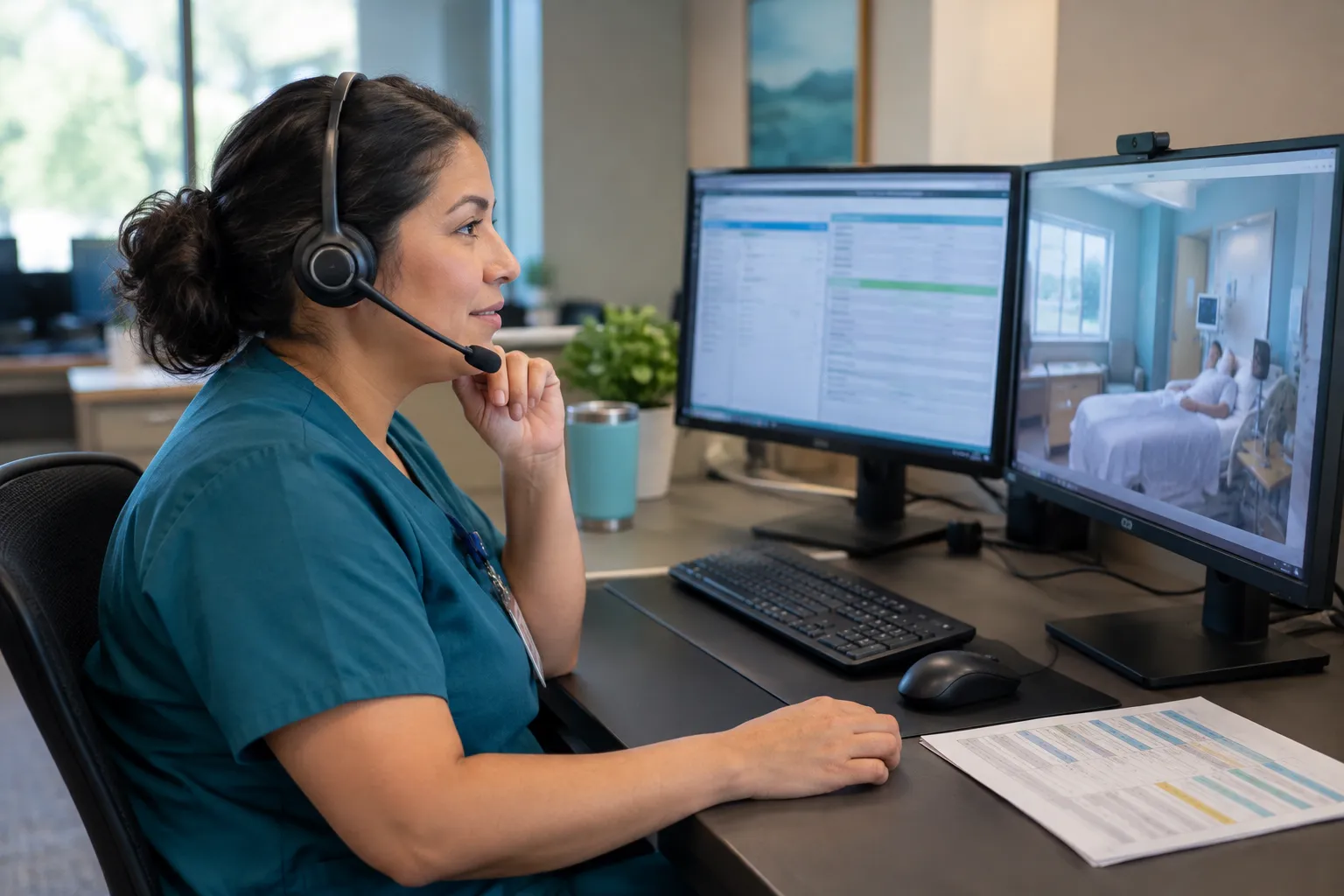
You're the nurse who coordinates care across settings. That means reviewing charts against criteria like InterQual or MCG, talking to patients by phone about their discharge plan, coordinating with providers and health plans, and documenting everything in the EHR. You're not at the bedside. You're on the phone and in the record, making sure the plan holds together.
Most remote case management roles sit in one of three buckets:
Which bucket you're in shapes your pay more than almost anything else. More on that below.
In the Telehealth Nurse Network job tracker, remote RN case manager postings over the last 6 months listed about $38 to $54 per hour (median of 24 posted ranges) and about $72K to $119K per year (median of 273 posted ranges). There were 451 postings in that window, and 155 were still open this week.
Two things stand out. First, salaried postings far outnumber hourly ones, so most of what you'll see is annual pay. Second, the hourly range and the salaried range overlap once you do the math. A $45 per hour role at 40 hours a week is roughly $93,600 a year before overtime or shift differentials. A $72K salaried role is closer to $34.60 an hour if you break it down. So the low end of the salaried range can pay less per hour than the high end of the hourly range.
That's why you compare the whole package, not just the headline number. Salaried roles often come with better benefits, paid holidays, and PTO. Hourly roles can pay more per hour but may not include the same perks.
The employers posting the most remote RN case manager roles in the tracker were Aetna (CVS Health), Elevance Health, Highmark Health, CareBridge, Optum / UnitedHealth, and Sedgwick. That's a mix of payers and vendors, which tracks with where most remote case management work lives.
You can browse the remote nursing job board to see what's open right now. Pay attention to whether a posting is hourly or salaried, because that changes how you read the number.
Pay isn't random. A few things reliably push it one way or the other.
The Certified Case Manager credential is the one most often listed as preferred or required. It won't double your pay, but it can move you from "meets requirements" to "preferred candidate," which matters at the offer stage. Check with the Commission for Case Manager Certification for current eligibility and exam rules before you plan around it.
Case management is not usually an entry point. Most postings want a few years of bedside or acute care experience first, and pay tends to step up with each year of case management experience after that.
Payer roles (health plans) often sit at the higher end of the salaried range. Provider roles can be more stable but sometimes pay less. Vendor roles vary widely. Ask which side of the table the job sits on before you compare two offers.
Oncology, behavioral health, workers' comp, and complex chronic condition programs can pay differently than general medical case management. Niche experience is worth naming in your application.
In the tracker, 22% of remote case manager postings asked for or accepted a compact (multistate) license. Holding one can widen the pool of jobs you qualify for, which gives you more ranges to compare. Confirm your status at nursecompact.com, and remember you still need a license in the state where the patient is located at the time of care.
Most remote case manager postings in the tracker are salaried, so that's the format you'll see most. Hourly postings are less common but can be worth a closer look if you want overtime eligibility or you're testing the waters on a contract basis.
A few practical differences:
If you're weighing two offers, the remote nurse pay negotiation guide walks through how to ask for more without guessing at numbers.
Start by getting clear on which bucket you're targeting (payer, provider, or vendor) and tailoring your resume to it. If you've done utilization review, discharge planning, or care coordination, name the criteria and tools you used: InterQual, MCG, the EHR system, phone triage protocols. Hiring managers scan for those words.
If you're new to case management, read the guide to remote nurse case manager roles to understand what the day actually looks like before you apply. It'll help you answer interview questions about caseload and documentation with something concrete.
And don't skip the license question. If a posting wants a compact license and you don't have one, that's a real gap. Check your status early so you're not surprised mid interview.
Pull up the remote nursing job board and look at five remote case manager postings. Note whether each is hourly or salaried and what the top of the range requires. That tells you what to build next, whether it's a CCM, a compact license, or a resume that names your criteria and EHR experience. If your resume needs a rewrite for remote roles, Telehealth Nurse Network rewrites nurse resumes for exactly this kind of job.
In the Telehealth Nurse Network job tracker, remote RN case manager postings listed about $38 to $54 per hour and about $72K to $119K per year over the last 6 months. Those are posted ranges, so actual offers depend on experience, certification, and the employer. Compare the whole package, not just the base number.
Not always, but many postings list it as preferred or required. It can help you stand out and sometimes moves you higher in the range. Check current eligibility and exam rules with the Commission for Case Manager Certification before you plan around it.
Most postings in the tracker are salaried, but hourly roles do exist. Hourly roles may offer overtime eligibility, while salaried roles often come with steadier pay and better benefits. Ask about caseload and expected hours before you accept either.
In the tracker, 22% of postings asked for or accepted a compact license. It's not required for every role, but it widens your options. Remember that you need a license in the state where the patient is located at the time of care, so confirm the details with your state board of nursing.